In-House Design Team vs. Full-Service Creative Agency: A Cost and Speed Comparison for Startups

In-House Design Team vs. Full-Service Creative Agency: A Cost and Speed Comparison for Startups
Founders usually make this decision backwards — they hire a designer because it feels like the "grown-up" move, then discover months later that one person can't cover brand, product, and content simultaneously. By the time the gap becomes obvious, a full hiring cycle and a chunk of runway are already gone.
The in-house design team vs. full-service creative agency decision isn't really about which option is "better" — it's about which one matches your current stage, budget, and speed requirements. Get this wrong early, and it's an expensive mistake to unwind.
This guide compares real costs, hiring timelines, and output speed across both models, so you can make this call with numbers instead of instinct.
TL;DR — Quick Summary
In-house hires carry hidden costs beyond salary — benefits, tools, management overhead, and hiring time all add up fast.
A single in-house designer rarely covers brand, product, and content design equally well — most specialize in one discipline.
Full-service agencies provide immediate, multi-disciplinary bandwidth without a multi-month hiring cycle.
Speed to first deliverable is dramatically faster with an agency, since there's no onboarding or tooling setup required.
The right answer often changes by stage — early-stage startups typically get more value from agency flexibility than fixed headcount.
A can also function as a bridge, supporting a startup until in-house hiring genuinely makes sense.
The Real Cost of an In-House Design Hire
A senior product designer's salary is only the visible part of the cost equation. Benefits, equipment, software licenses, and recruiting fees typically add a substantial percentage on top of base salary — a figure many founders underestimate when budgeting their first design hire.
Costs Founders Frequently Forget to Budget For
Recruiting time and fees, whether internal hours spent screening or external recruiter commissions
Design tool subscriptions — Figma, Adobe Creative Cloud, prototyping and testing tools
Management overhead — someone senior now needs to review, direct, and evaluate design output
Ramp-up time before a new hire is fully productive, typically several weeks even for strong candidates
None of these costs show up in a simple salary comparison, but all of them affect the real math behind an versus an agency engagement.
The Hiring Timeline Problem Most Founders Underestimate
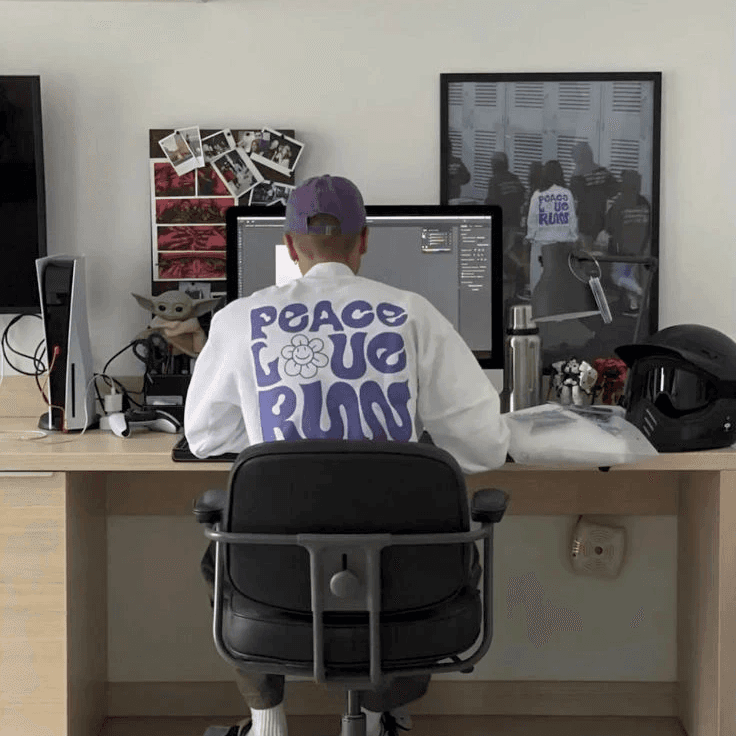
Even with a strong recruiting process, filling a single senior design role commonly takes six to twelve weeks from job posting to signed offer. That timeline stretches further for specialized roles like brand identity or design systems expertise.
During that entire window, whatever design work prompted the hire in the first place simply doesn't get done. For a startup racing toward a launch or fundraising milestone, that delay carries real opportunity cost.
Why Speed Matters More at Early Stages
Early-stage startups are often validating product-market fit or preparing for a raise — both scenarios where design delays translate directly into delayed revenue or delayed funding. A three-month hiring gap during this window can be the difference between hitting a critical deadline and missing it entirely.
This is precisely where an agency's ability to start within days, rather than months, becomes a genuine competitive advantage — not just a convenience.
Why One In-House Hire Rarely Covers What Startups Actually Need
Here's a structural problem with the "just hire one designer" approach: most individual designers specialize in one discipline — brand identity, product UI/UX, or content design — not all three. A startup asking one hire to cover everything is setting them up to be mediocre across the board rather than excellent at one thing.
This mismatch becomes obvious the moment a startup needs a rebrand and a product redesign in the same quarter, with only one person to execute both.
The Multi-Disciplinary Gap in Solo Hires
Brand identity work requires strategic positioning and visual systems thinking, distinct from interface design skills
Product UI/UX requires interaction design, usability testing instincts, and technical collaboration with engineers
Content and social design requires an entirely different production cadence and platform-specific fluency
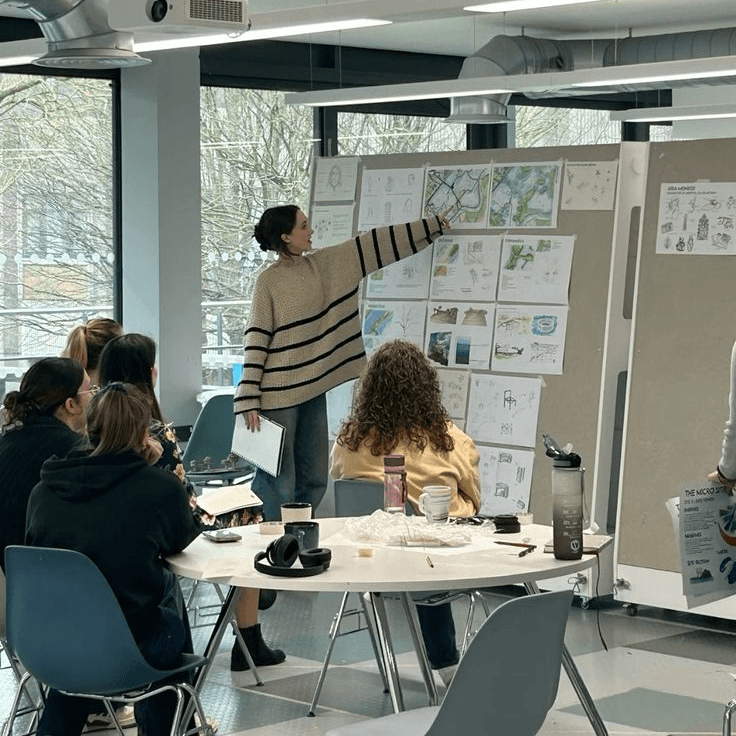
A full-service agency solves this by default, since the team already spans these disciplines and coordinates them as one system rather than asking a single hire to context-switch constantly.
Speed to First Deliverable: A Direct Comparison
Founders consistently underestimate how much faster an established agency can move on day one, simply because the infrastructure already exists. There's no hiring process, no tool setup, and no ramp-up period — work can start almost immediately after a scope is agreed.
Typical Timelines Compared
In-house hire: 6–12 weeks to hire, plus 2–4 weeks of ramp-up before full productivity — roughly 2–4 months before meaningful output
Full-service agency: Scoping and kickoff typically within days, with initial deliverables often arriving within the first one to two weeks
This gap compounds when a startup needs design support urgently — ahead of a fundraise, a launch, or a critical product milestone. Speed isn't just a convenience factor here; it's often the deciding variable.
If your team is facing exactly this kind of time pressure, it's worth exploring what a rapid-start design engagement could look like before committing to a lengthy hiring process instead.
Where In-House Genuinely Wins
None of this means in-house design is the wrong choice — it's simply the right choice under different conditions. Once a company reaches sufficient scale and has a steady, high volume of design requests, an in-house team becomes more cost-efficient than ongoing agency fees.
In-house designers also build deep, compounding product context over time that's genuinely valuable — institutional knowledge an outside partner has to rebuild with every new engagement.
Signs You're Ready for an In-House Team
Consistent, high-volume design demand that would otherwise require multiple concurrent agency engagements
A mature product where deep, ongoing context matters more than fresh outside perspective
Budget stability that supports fixed headcount without straining runway
Most startups reach this stage later than they expect — often well after their first product launch and initial brand build-out, not before it.
The Hybrid Model Most Founders Don't Consider
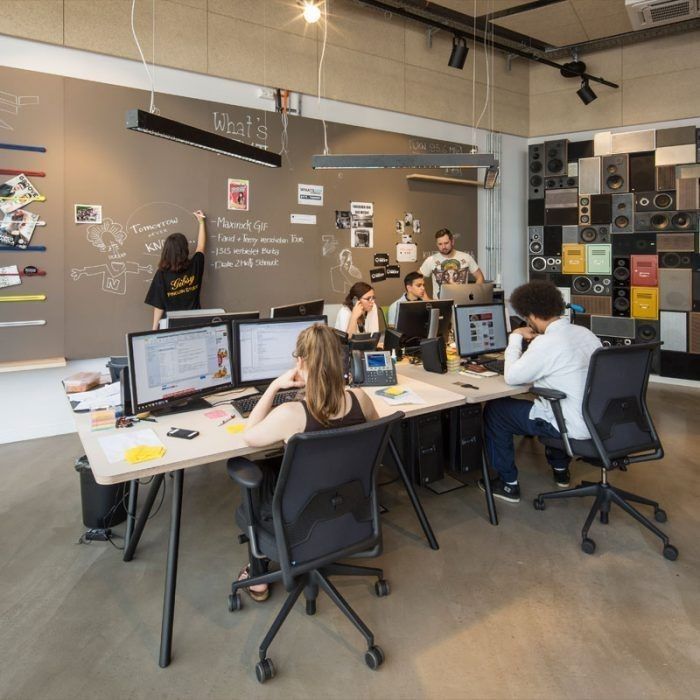
The choice doesn't have to be binary. Many of the most efficient startups use a full-service agency to cover multi-disciplinary needs early, then transition specific functions in-house only once volume genuinely justifies it.
This hybrid approach captures the speed and breadth advantages of an agency while avoiding premature fixed-cost commitments. It also gives founders real data — from actual project volume — to make a smarter in-house hiring decision later, rather than guessing upfront.
What a Hybrid Engagement Typically Looks Like
Agency handles brand identity and initial product design during the pre-launch and early growth phase
Startup builds in-house capacity once a specific discipline — often product design — reaches sustained, predictable volume
Agency remains available for overflow, specialized projects, or disciplines that never reach in-house volume thresholds
This is exactly the kind of flexible partnership we structure regularly — starting as a startup's full design function, then scaling the relationship down as internal capacity grows. If that flexibility sounds more realistic than an all-or-nothing hire, it's worth a conversation about how a scalable design partnership could fit your specific runway and roadmap.
Making the Decision: A Practical Framework
Rather than defaulting to whichever option feels more conventional, run the decision through a few concrete questions specific to your situation.
Questions Worth Answering Before You Decide
Do you need multiple design disciplines simultaneously, or just one, sustained skill set?
Can your timeline absorb a 2–4 month hiring and ramp-up window, or do you need output within weeks?
Is your design demand currently steady and high-volume, or does it fluctuate by project and season?
Does your budget favor a fixed monthly cost, or does variable, scope-based spending fit better right now?
Answering these honestly usually makes the right choice fairly obvious — and it's rarely the option a founder defaults to out of habit or perceived prestige.
Final Thoughts: Match the Model to the Moment, Not the Trend
There's no universally correct answer to in-house versus agency — only a correct answer for your specific stage, budget, and timeline. Founders who treat this as a stage-based decision, rather than a permanent philosophical stance, consistently make better use of their design budget.
Most early-stage startups are better served by the speed and breadth of a full-service agency, transitioning to in-house capacity only once volume and budget genuinely justify it. Getting this sequencing right protects runway and keeps design quality high exactly when it matters most — during the phase when first impressions are being formed with investors and customers alike.
If you're currently weighing this decision and want a clearer picture of what a flexible engagement could look like for your specific roadmap, Liqd Studio's team regularly partners with founders navigating exactly this trade-off — providing full-service design capability without the cost and timeline risk of a premature in-house build-out